Prague
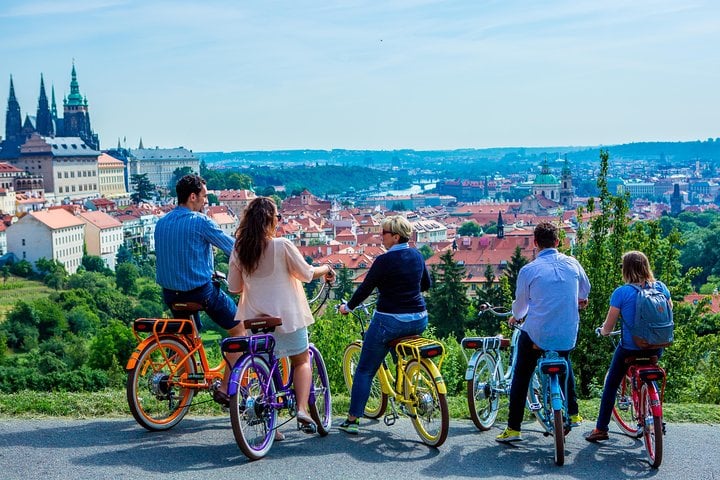
7 BEST VIEWS - PRAGUE eBIKE TOUR
5.0(2,116)rated 5.0 out of 5 from 2116 reviews 3 hr 30 min
Free cancellation
from $69.18
Loading experience…
From$231.79per person
Final price, including all taxes and fees
This custom-tailored private walking tour was developed after many years of guiding experience and is especially designed for those who have only one day to see all the major sights in Prague in a relaxed way.
On this tour, you will explore the most famous areas of Prague: the Old Town, Jewish Quarter, Charles Bridge, Lesser Town (Little Quarter), and Prague Castle.
This is a private walking tour, so you set the pace. If you wish, you can also take a break for coffee, lunch, or even a boat trip (not included). Your tour guide will also provide you with tips for the remaining days of your stay.
If you are spending more than one day in Prague, we recommend splitting the Best of Prague tour over two days by booking the right riverbank and left riverbank tours.You can find those tours on Viator under the following titles:
- Prague Castle Private Walking Tour (Including Castle Tickets)
- Prague’s Old Town, Jewish Quarter and Charles Bridge Private Tour
Pickup
The operator picks you up. You choose your pickup place at checkout.
Pickup from your hotel or a nearby point
Stop 1
Hradcany, , 11908 Prague
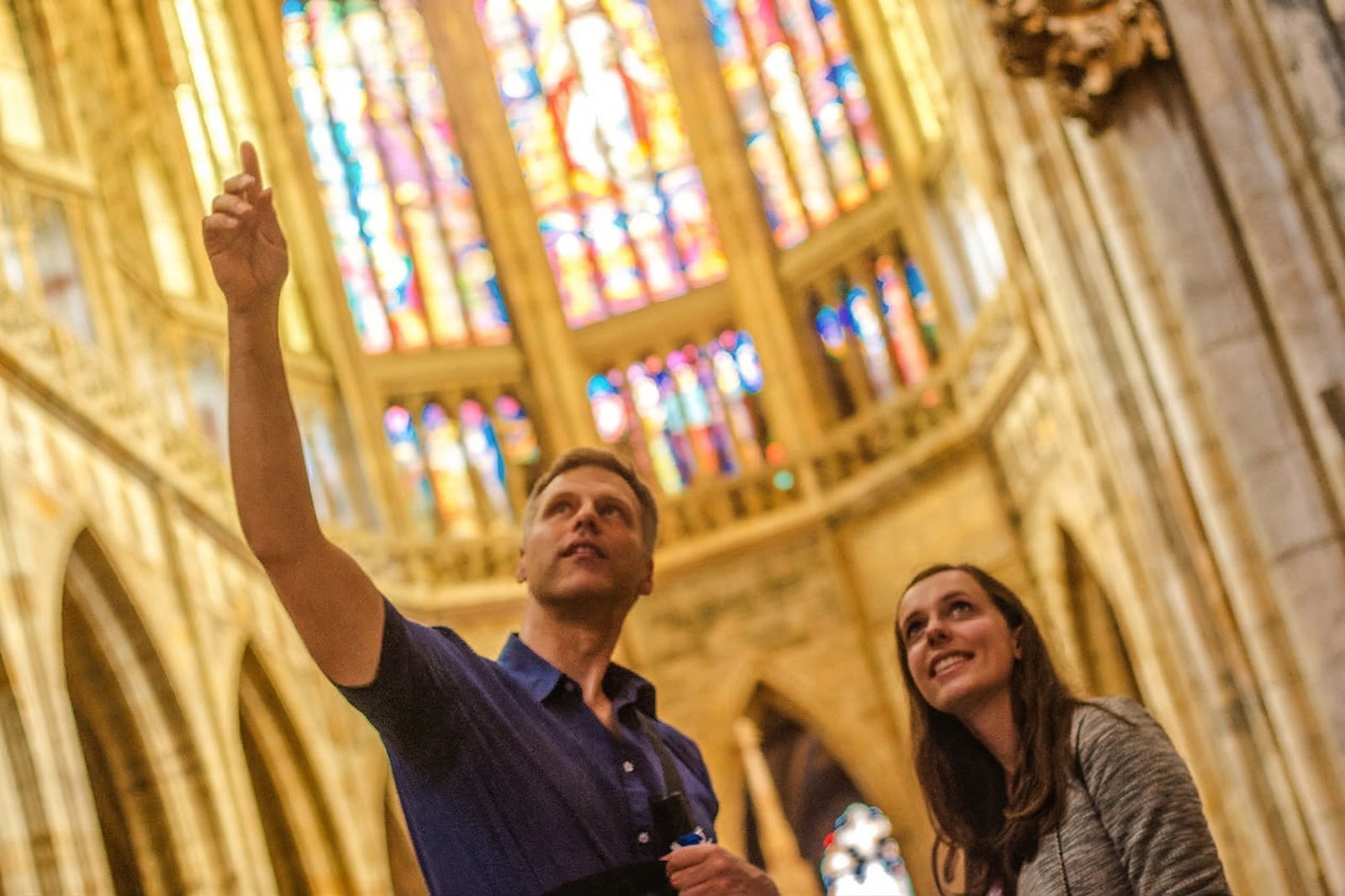
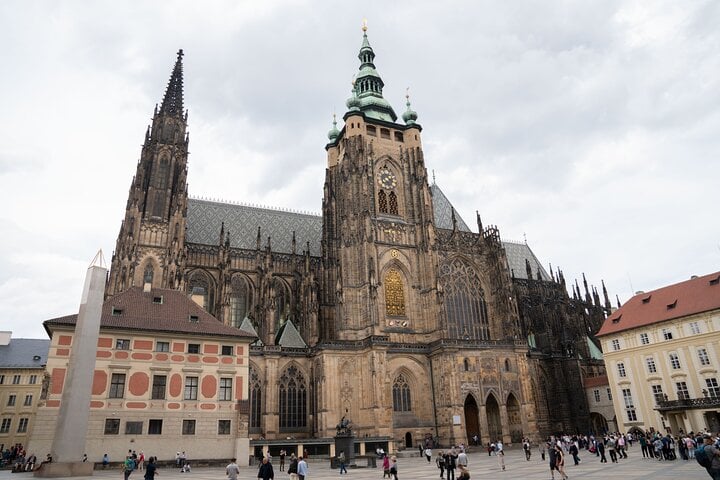
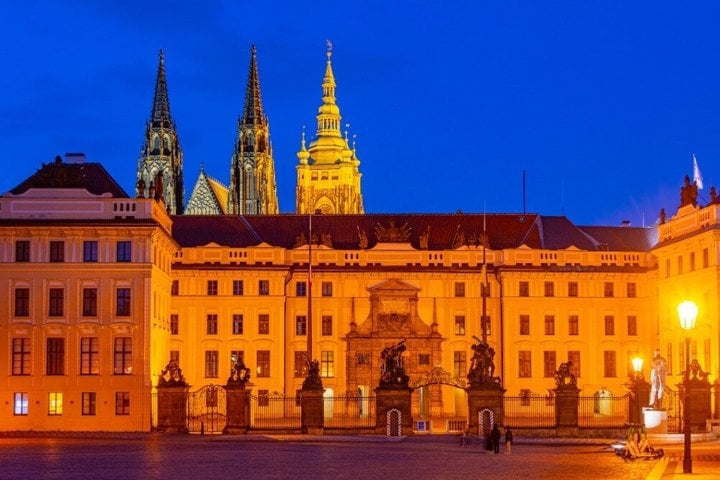
Prague Castle, the largest castle complex in the world, is a highlight of any tour of Prague. This stunning architectural achievement, which took centuries to complete, reigns supreme from a hill above the rest of the city. The Castle, founded in 870, is also the seat of the Czech president. Dominating the complex is the breathtaking, mostly Gothic Saint Vitus’ Cathedral, which took a staggering 1,000 years to build. Under Emperor Charles IV, Prague Castle was the seat of the Holy Roman Empire. During darker days, Adolf Hitler occupied it.In rosier times, first democratic president Tomáš G. Masaryk and dissident-playwright-turned president Václav Havel ran the country from here.
Stop 2
Karluv Most, , 11000 Prague
The Charles Bridge is arguably the most beautiful gothic bridge in the world. Commissioned by King Charles IV, Holy Roman Emporer and King of Bohemia, the bridge has served as an essential link between Prague’s Old Town and the Lesser Quarter and Prague Castle, for hundreds of years. The bridge features 30 saintly Baroque statues, mostly made of sandstone and added in the 18th century. Most of the statues you see today are replicas. The first statue to be erected on the Charles Bridge is made of bronze. This is the statue of St. John of Nepomuk, the patron saint of Bohemia. According to legend John of Nepomuk refused to reveal the confessions of the wife of King Wenceslas IV, and was thrown off the side of the bridge to his death. On that same night, five stars appeared in the sky above the place of his death, which is why there is always a five-starred halo above any statue of St. John of Nepomuk.
Stop 3
StaromEstske NamEsti 1/3, , 110 00 Prague
The impressive Old Town Hall, with a 60-meter tower at one end, was built in 1338. On its earthy orange façade stand out a Renaissance window from 1520, the inscription Praga Caput Regni and the Old Town coat-of-arms. Crowds gather on the hour to watch the 15th century astronomical clock, as Death tips an hour glass and rings a bell before the 12 apostles march by, the cock crows and another bell rings. Notice Apostle Paul’s sword and book. The complex works also show the time of sunrise and sunset, the position of the moon and the distance of the Earth from the Sun.
Stop 4
, , Prague
History seeps through the New Town, as many of the country’s most significant events happened in this district that was almost three times as big as the Old Town at its creation, then measuring about 620 acres in area. Founded by Holy Roman Emperor Charles IV in 1348, the New Town was supposed to be the Jerusalem of Eastern Europe. Perhaps the most famous sight is the 820-yard long Václavské náměstí (Wenceslas Square), which now flaunts businesses, shops and hotels. Established as a horse market in the 14th century, the square crosses the total width of the New Town and boasts Classicist, Art Nouveau and Neo-Gothic facades, to name a few of the many styles represented there. Wenceslas Square has been the site of many significant events in Czech history. Imagine philosophy student Jan Palach setting fire to himself in January of 1969 on the steps of the National Museum. Listen to the rumble of the Soviet tanks passing through the square as the Soviets crush the Prague Spring in August of 1968. Try to envision the crowds that gathered here during the large demonstration on the 20th anniversary of Palach’s death. Go back in time, when the square was bursting with 300,000 demonstrators every evening during the November 1989 Velvet Revolution.
Stop 5
Malostranske Namesti, Praha 1, 11800 Prague
Prague’s Lesser Quarter has had an interesting past. The area, located below Prague Castle and extending along the Vltava River, was originally a series of small settlements outside the castle fortifications. At that time, the population was mostly ethnic German, merchants who had been invited by King Přemysl Otakar II. The town was ravaged by fire in a Hussite battle in 1419, then again in the fire of 1541, which also damaged St. Vitus’ Cathedral. In the year 1257, these settlements were consolidated, and a separate royal town was formed. Originally called Malé Město Pražské (Prague Lesser Town), the name eventually changed to Malá Strana (Lesser Quarter). The quarter houses many magnificent buildings once owned by the nobility, such as Valdštejn (Wallenstein) palace.
Stop 6
Velkoprevorske namesti, Mala Strana, 11800 Prague
The visitor to Prague who wanders the small streets near the river in the Malá Strana district may turn a corner and discover a long wall covered in graffiti. These days, it can be difficult to tell at first what the purpose is. Upon closer examination, the scrawls and paintings come together, and it is clear that this is a tribute to John Lennon. Graffiti started appearing on this wall (the property of the Knights of the Maltese Cross) during the Communist era. The Beatles, and Lennon, had a wide following in the former Czechoslovakia, and when news of Lennon’s death in 1980 reached the country, some of these fans were determined to pay tribute to him. This was no small task; Western music was banned at the time, and the fans risked imprisonment for openly stating their admiration for John Lennon.
Operated by Custom Travel Services s.r.o.
Cancel up to 24 hours before the start time for a full refund. Cancellations after that, or no-shows, are not refunded.
How cancellations and refunds work4.9
Based on 685 reviews on Tripadvisor
Rating as published on Tripadvisor for this operator's experience.
Read the reviews on TripadvisorPrague
Free cancellation
from $69.18
Prague
Free cancellation
from $53.83
Prague
Free cancellation
from $51.43
Prague
Free cancellation
from $17.46
Prague
Free cancellation
from $72.51
Špindlerův Mlýn
from $384.48
from
$231.79 per person