Hurghada
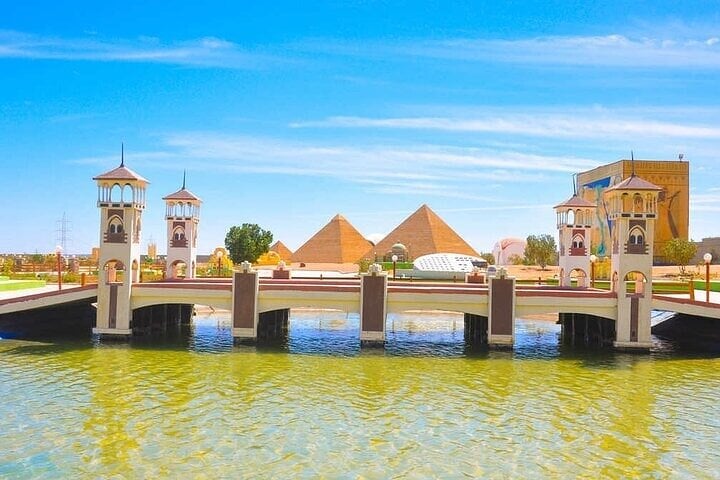
Mini Egypt Park Open Museum From Hurghada
4.8(2,426)rated 4.8 out of 5 from 2426 reviews 2 hours
Free cancellation
from $41.12
Loading experience…
From$130.27per person
Final price, including all taxes and fees
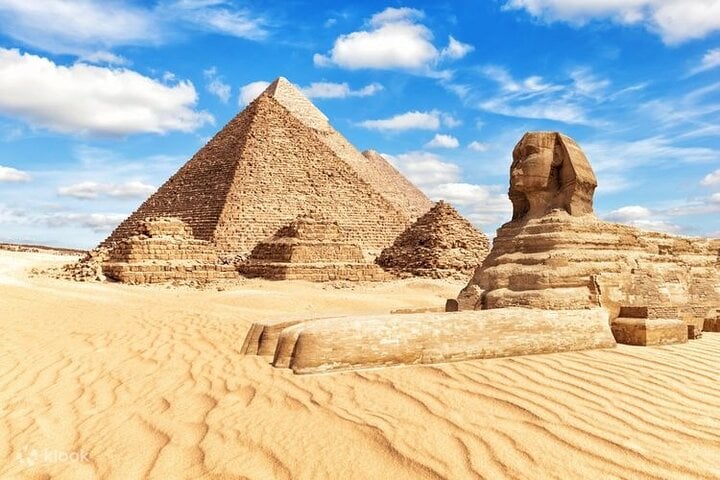
Step back in time and uncover the wonders of ancient Egypt on the Dahshur Pyramids Memphis and Sakkara Half Day Tour. This half-day excursion takes you on a journey through history as you visit the stunning Dahshur Pyramids, the ancient city of Memphis, and the archaeological site of Sakkara. Marvel at the impressive architecture of the Red Pyramid and the Bent Pyramid, explore the expansive ruins of Memphis, and gaze upon the Step Pyramid of Djoser in Sakkara. Gain invaluable insights into Egypt's storied past and immerse yourself in the country's rich cultural heritage on this educational and engaging tour.
Pickup
The operator picks you up about 5 minutes before the start time. You choose your pickup place at checkout.
Pickup from your hotel or a nearby point
About 5 minutes before the start time
Stop 1
12919 Saqqara
Memphis (Arabic: مَنْف, romanized: Manf, pronounced [mænf]; Bohairic Coptic: ⲙⲉⲙϥⲓ; Greek: Μέμφις), or Men-nefer, was the ancient capital of Inebu-hedj, the first nome of Lower Egypt that was known as mḥw ("North").[3] Its ruins are located in the vicinity of the present-day village of Mit Rahina (Arabic: ميت رهينة), in markaz (county) Badrashin, Giza, Egypt.[4] This modern name is probably derived from the late Ancient Egyptian name for Memphis mjt-rhnt meaning "Road of the Ram-Headed Sphinxes".[5]
Along with the pyramid fields that stretch on a desert plateau for more than 30 kilometres (19 mi) on its west, including the famous Pyramids of Giza, Memphis and its necropolis have been listed as a World Heritage Site.[6] The site is open to the public as an open-air museum.
According to legends related in the early third century BC by Manetho, a priest and historian who lived in the Ptolemaic Kingdom during the Hellenistic period of ancient Egypt, the city was founded by King Menes.
Stop 2
3364932 Badrshein
The Sphinx of Memphis or Alabaster Sphinx is a stone sphinx located near the remains of Memphis, Egypt. The carving is believed to have taken place between 1700 and 1400 BCE, which was during the 18th Dynasty. It is not known which pharaoh is being honored and there are no inscriptions to supply this information. Facial features imply that the Sphinx is honoring Hatshepsut, or Amenhotep II, or Amenhotep III.
Stop 3
3364932 Badrshein
The Statue of Ramesses II is a 3,200-year-old figure of Ramesses II, depicting him standing. It was discovered in 1820 by Giovanni Battista Caviglia at the Great Temple of Ptah near Memphis, Egypt. It is made from limestone and weighs 83 tons. This statue was built to celebrate the victory over the Hittites in the Battle of Kadesh in 1274 B.C.[citation needed]
The statue was found broken in six pieces and earlier attempts at restoration failed. In 1955, Egyptian Prime Minister Gamal Abdel Nasser moved it to the large Bab Al-Hadid Square in Cairo, outside Cairo's main railway station; the square was then renamed Ramses Square. There the statue was restored to its full height of 11 meters and erected on a three-metre pedestal at the edge of a fountain. It was stabilized by iron bars inside the body.
Stop 4
Al Giza Desert, , 12919 Saqqara
Saqqara (Arabic: سقارة, Egyptian Arabic pronunciation: [sɑʔːɑːɾɑ]), also spelled Sakkara or Saccara in English /səˈkɑːrə/, is an Egyptian village in the markaz (county) of Badrashin in the Giza Governorate,[1] that contains ancient burial grounds of Egyptian royalty, serving as the necropolis for the ancient Egyptian capital, Memphis.[2] Saqqara contains numerous pyramids, including the Pyramid of Djoser, sometimes referred to as the Step Tomb, and a number of mastaba tombs. Located some 30 km (19 mi) south of modern-day Cairo, Saqqara covers an area of around 7 by 1.5 km (4.3 by 0.9 mi).
Saqqara contains the oldest complete stone building complex known in history, the Pyramid of Djoser, built during the Third Dynasty. Another sixteen Egyptian kings built pyramids at Saqqara, which are now in various states of preservation. High officials added private funeral monuments to this necropolis during the entire Pharaonic period. It remained an important complex for non-royal
Stop 5
3300001 Badrshein
The Red Pyramid, also called the North Pyramid, is the largest of the pyramids located at the Dahshur necropolis in Cairo, Egypt. Named for the rusty reddish hue of its red limestone stones, it is also the third largest Egyptian pyramid, after those of Khufu and Khafre at Giza. It is also believed to be Egypt's first successful attempt at constructing a "true" smooth-sided pyramid. Local residents refer to the Red Pyramid as el-heram el-watwaat, meaning the Bat Pyramid.
The Red Pyramid was not always red. It used to be cased with white Tura limestone, but only a few of these stones now remain at the pyramid's base, at the corner. During the Middle Ages much of the white Tura limestone was taken for buildings in Cairo, revealing the red limestone beneath.
Operated by Emo Tours Sweden
Cancel up to 24 hours before the start time for a full refund. Cancellations after that, or no-shows, are not refunded.
How cancellations and refunds workHurghada
Free cancellation
from $41.12
Marsa Alam
Free cancellation
from $35
Saint Catherine
Free cancellation
from $30
Marsa Alam
Free cancellation
from $37
Cairo
Free cancellation
from $70
Marsa Alam
Free cancellation
from $75
Free cancellation
from $20
Hurghada
Free cancellation
from $40
from
$130.27 per person